

If you have run into this problem, there is most likely no mechanical fault in the equipment. Let’s take a quick look at how the hoist and its control work.
The GIS hoist has a three-phase motor whose direction of rotation depends on the phase sequence. In practice, the direction changes when two phases are swapped.
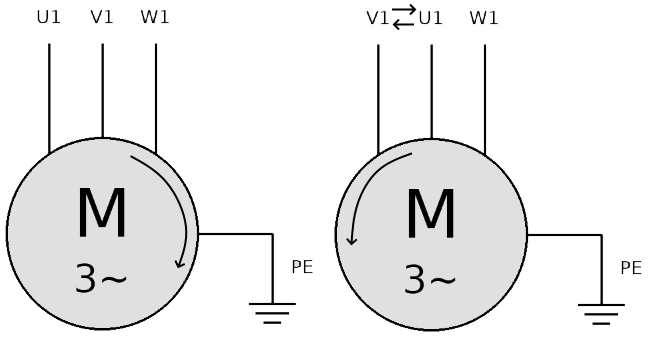
The control circuit of the GIS hoist is built with a 42 V transformer that takes its voltage from two phases. This connection method does not detect the phase sequence.
This leads to a situation where the limits in the control work absolutely: the upper limit is always the upper limit, and the lower limit always stays the lower limit. When the phase sequence changes, the motor rotates in the wrong direction: the hoist drives the hook into the body, but the control thinks it is not at the upper limit but at the lower limit. So the hoist lets you drive further up against the body but refuses to drive down. The same thing happens at the other end, where the hook will no longer rise from the lower position.
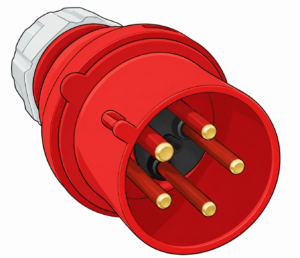
The fix is easy and only requires changing the order of the supply phases: L1 -> L2 and L2 -> L1. A plug-in device usually has a phase inverter in the three-phase plug, which lets you do the same thing quickly with a screwdriver.
Please note that by carrying out procedures you are not familiar with or do not master, you may in the worst case damage the device or cause a hazardous situation.
GIS GP ketjusähkönostimet – Tehokas ja kestävä nostoratkaisu jopa 8 000 kg saakka


