
Description
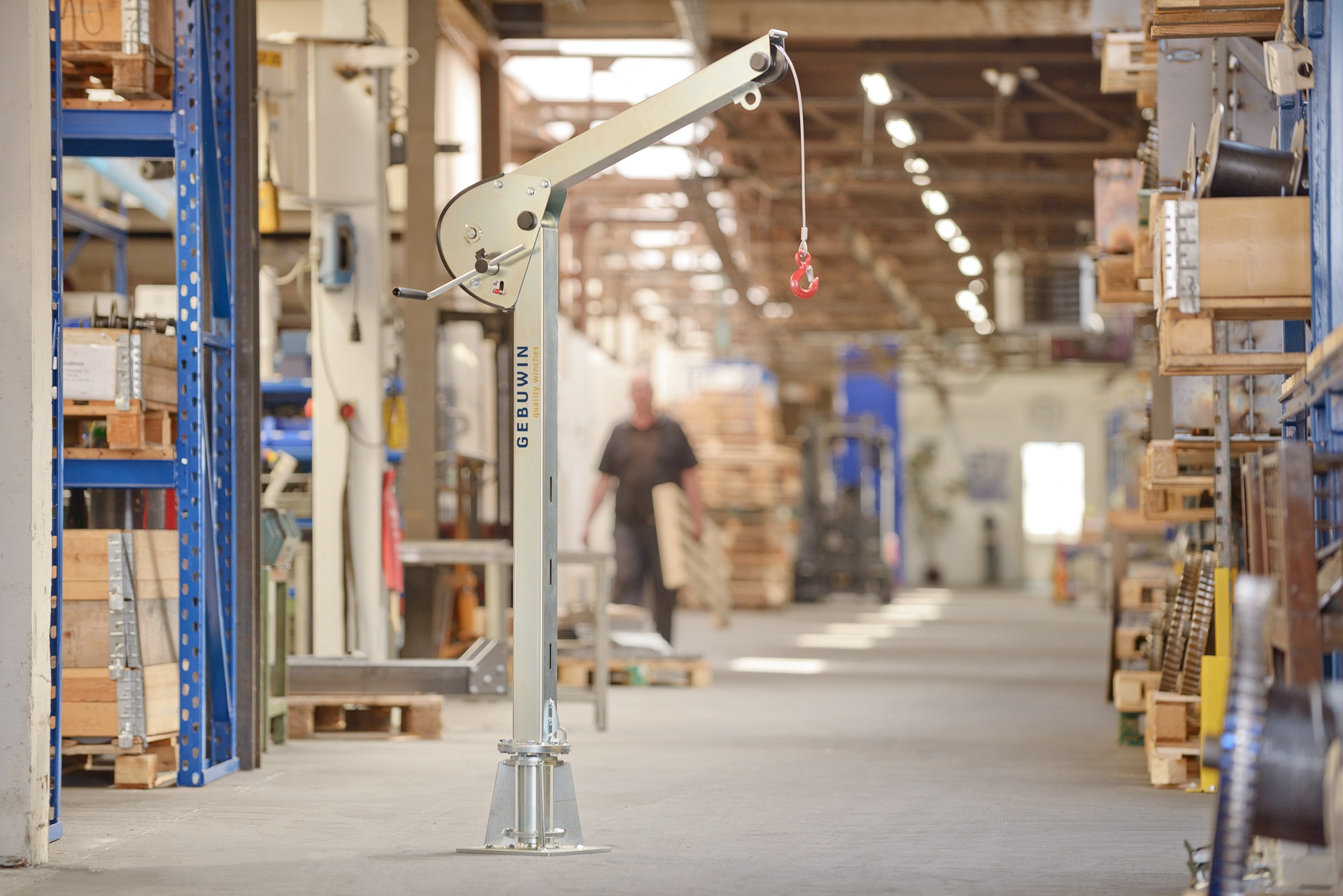
The Gebuwin portable davit crane is made for lifting on location: in wells, pumping stations, water treatment plants and on quays. The crane is moved from site to site and placed in a pre-installed socket, so one crane serves several lifting points. All models comply with EN 13157.
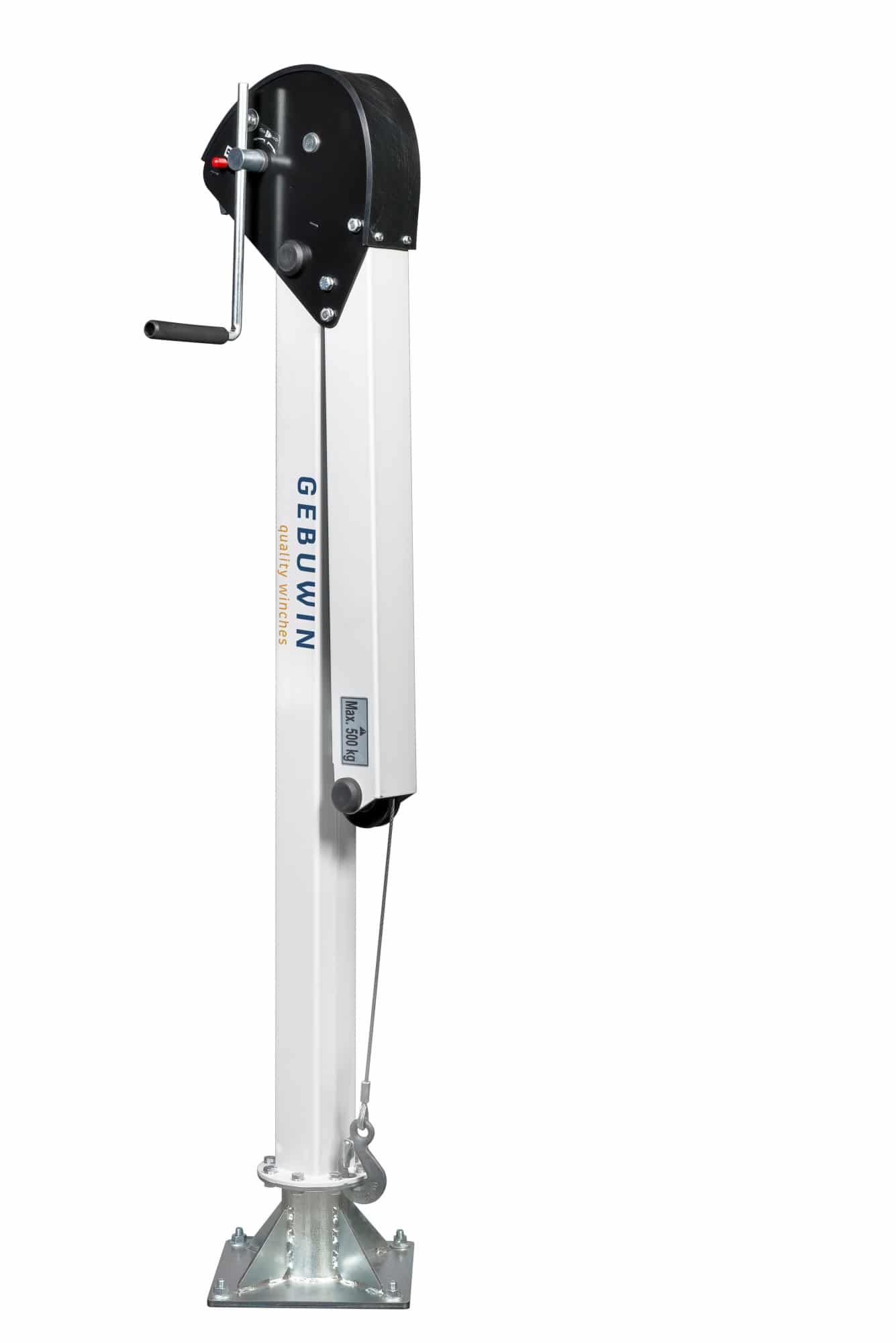
SD125, SD250 and SD500 – folding davit crane with integrated winch
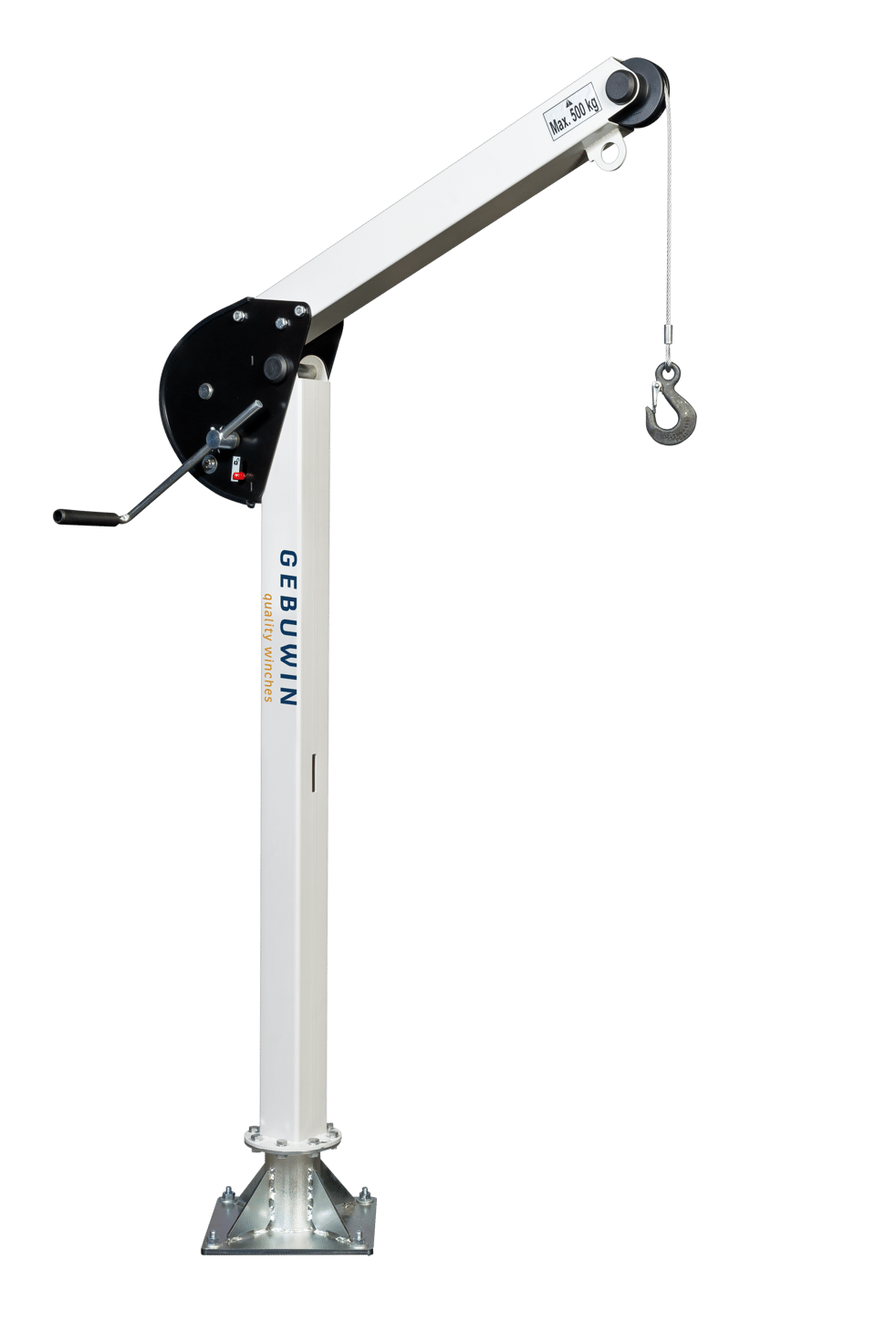
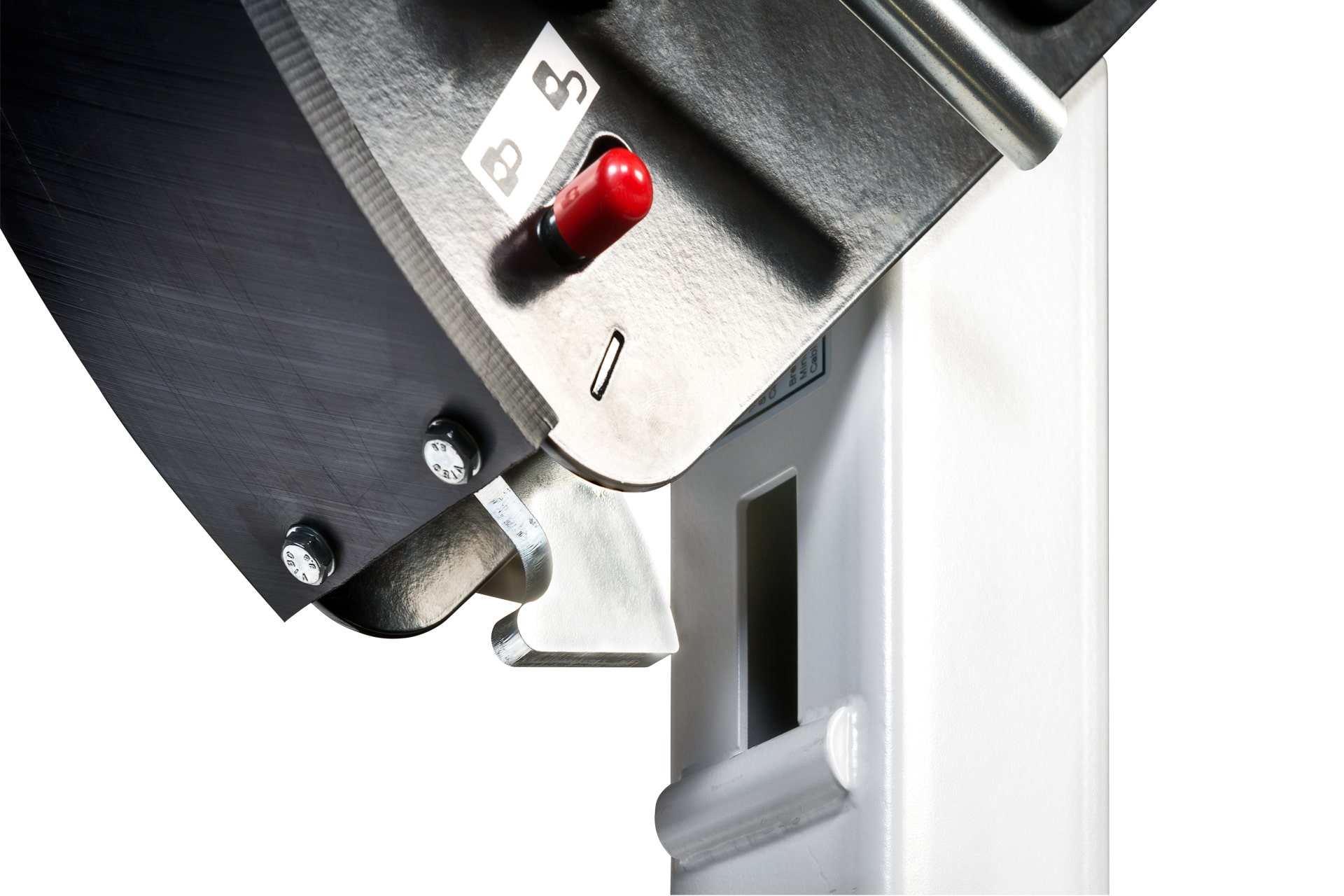
Fold out the boom and the crane is ready to use in about five seconds. The winch and rope are integrated into the frame, so the crane is compact and maintenance-free. The ball-bearing mast rotates 360°. A load pressure brake with double ratchet holds the load in place, and the crank length is adjustable.
| Model | Capacity | Rope Ø | Rope storage | Lifting speed | Weight |
|---|---|---|---|---|---|
| SD125 | 125 kg | 4 mm | 18 m | 1.2 m/min | 30 kg |
| SD250 | 250 kg | 4 mm | 18 m | 1.2 m/min | 30 kg |
| SD500 | 500 kg | 5 mm | 13 m | 1.2 m/min | 30 kg |
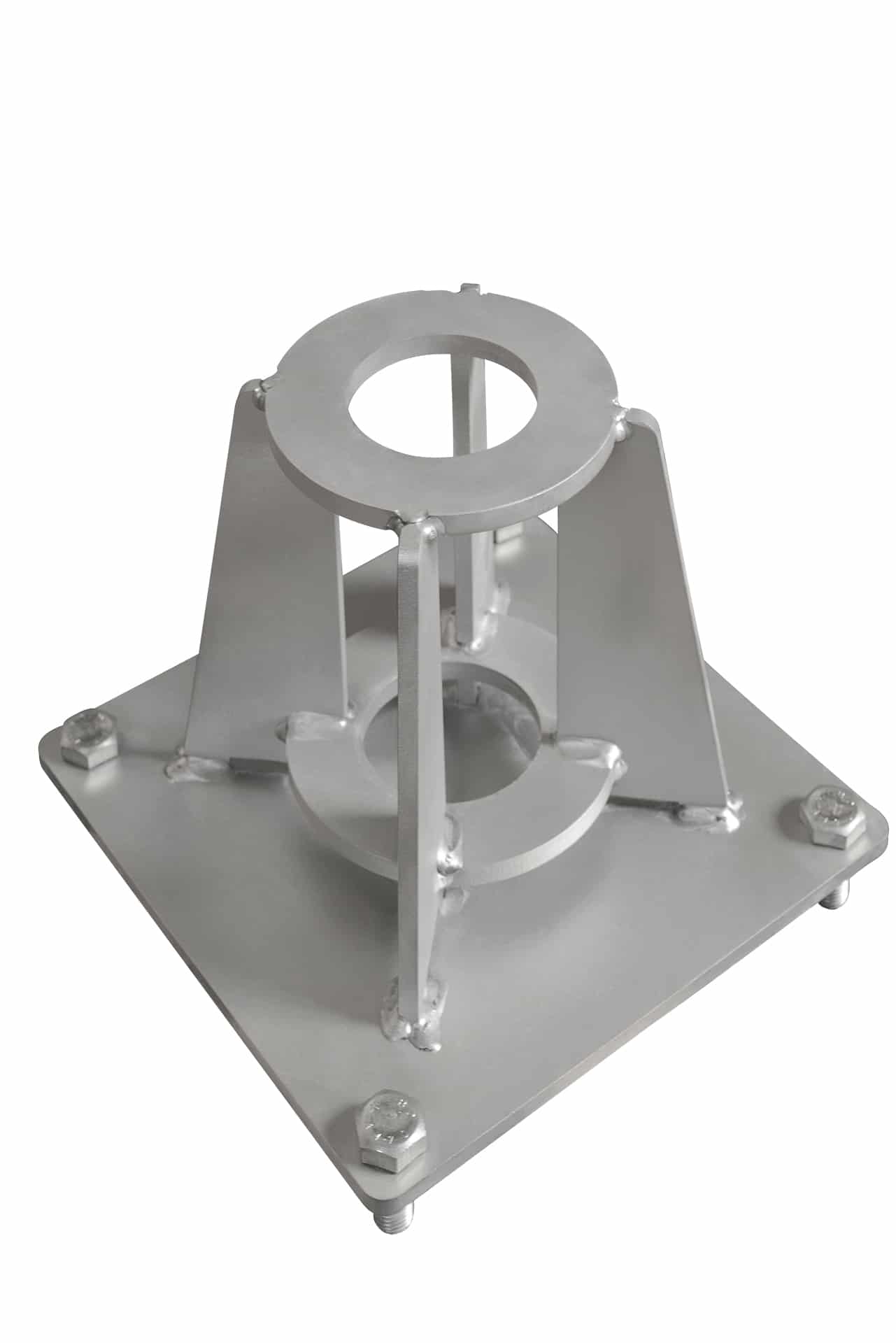
Floor socket weight 8.9 kg. Available painted, zinc-plated and in AISI 316 stainless steel. ATEX version for zones 2 and 22.
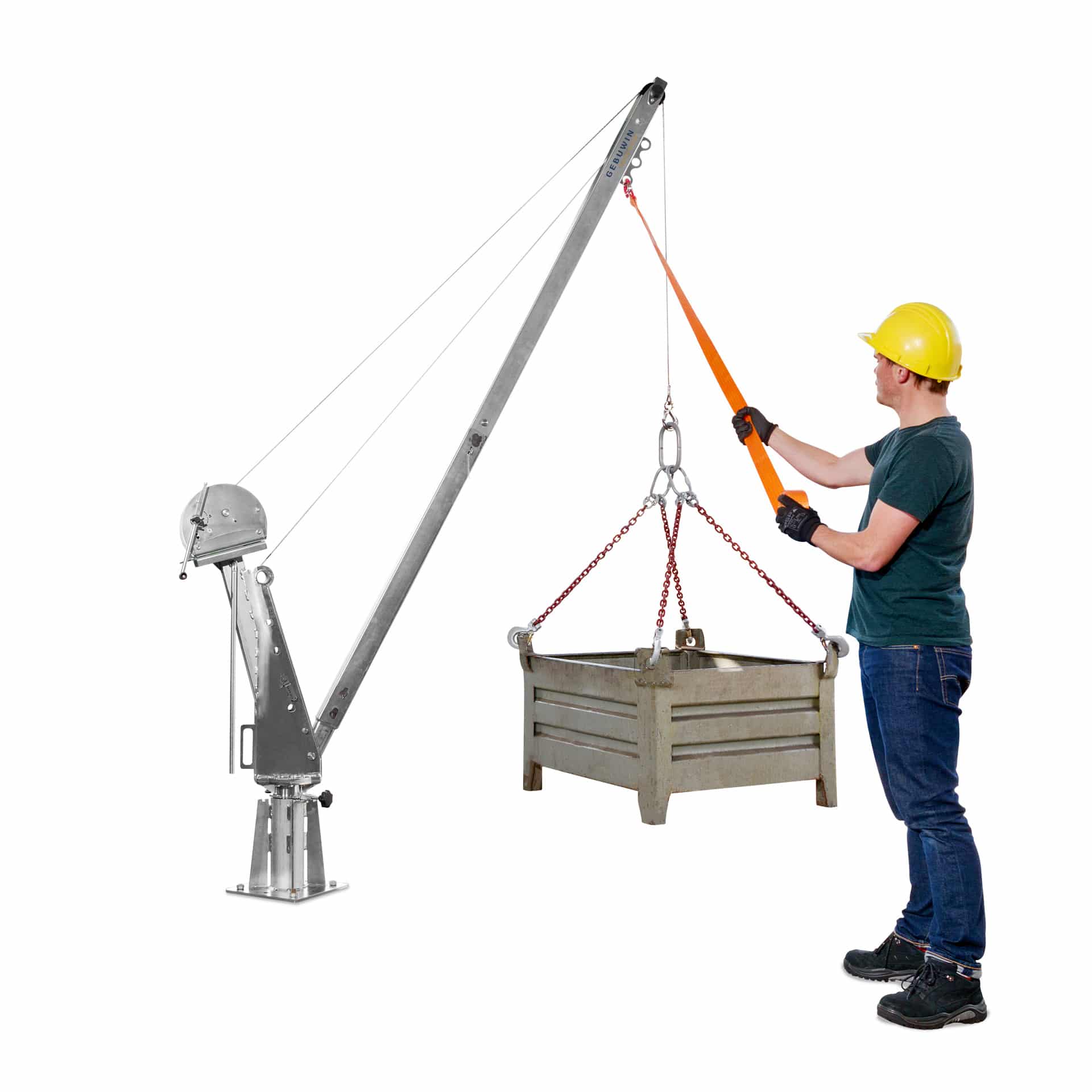
SD900 and SD750 SST – portable davit crane with 2 m reach
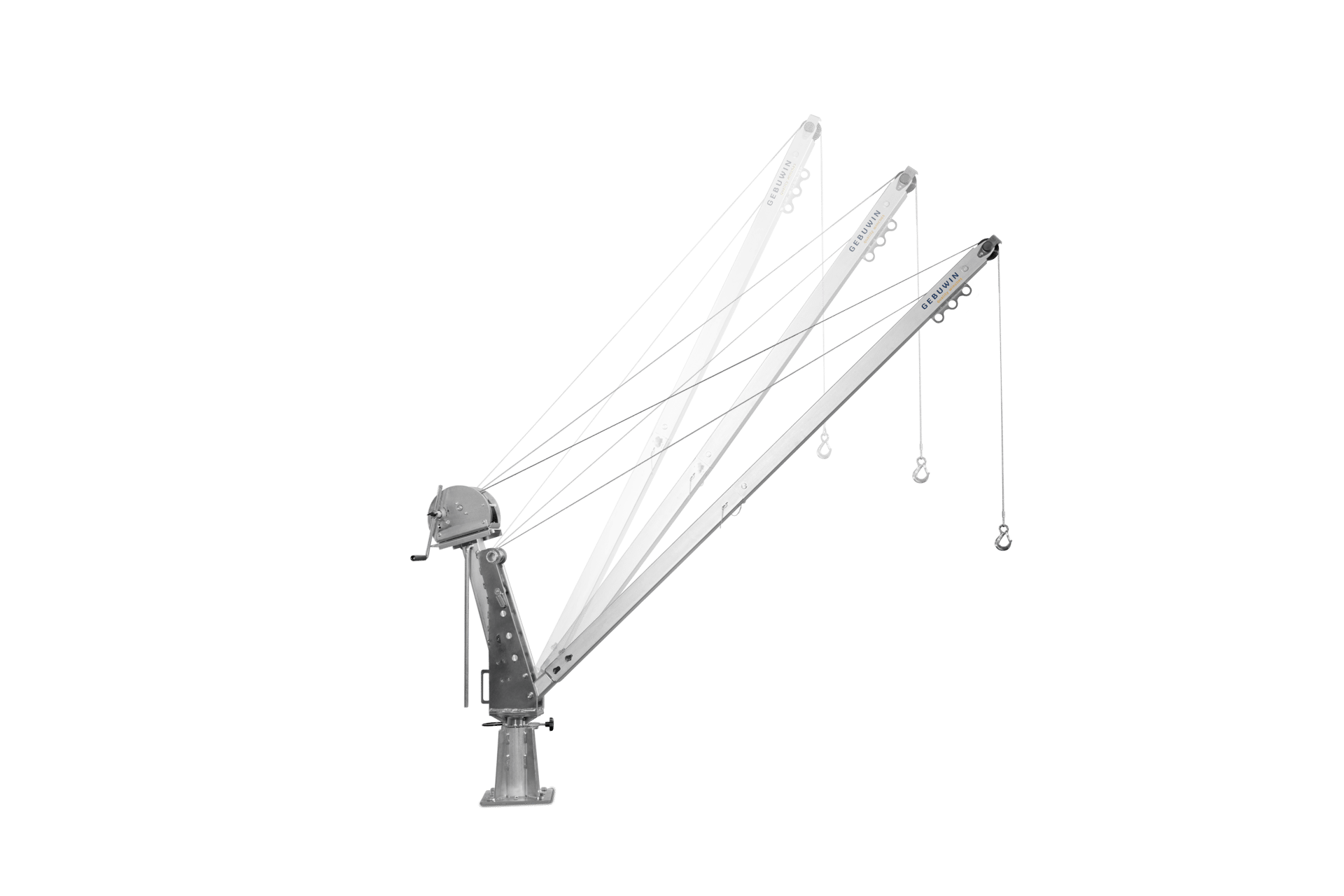
A larger davit crane assembled from four parts. The boom reach can be set in three positions, and the slewing motion can be locked for controlled lifting and lowering. The crane is fitted with a CW700 or TL1500 winch, or a chain hoist if required.
| Reach | SD900 zinc-plated | SD750 SST AISI 316 |
|---|---|---|
| 1.0 m | 900 kg | 750 kg |
| 1.5 m | 800 kg | 600 kg |
| 2.0 m | 600 kg | 500 kg |
Weight without winch 49 kg; TL1500 winch 27 kg or CW700 14 kg. Rope 8 mm, rope storage 33 m.
Applications
A portable davit crane suits sites where lifting is done regularly but infrequently, and building a fixed crane at every point is not worthwhile. Typical applications:
- Wastewater treatment plants and waterworks – lifting submersible pumps, mixers and valves from basins and wells
- Sewage pumping stations and sewer network wells
- Industrial service and maintenance sites where the lifting point changes
- Quays, boats and offshore sites, where the AISI 316 stainless version is chosen
- ATEX areas, such as biogas plants and the chemical industry, with the ATEX version
Thanks to its light construction, one person can move the SD model from site to site. Lifting is manual, so no electricity is needed.
Installation
Each lifting point gets its own socket, into which the davit crane is placed during use. The socket is positioned so that the boom reaches over the equipment to be lifted and the load can be swung to the set-down point. We dimension the socket and fixing for the structure on site once you tell us the load, lifting height and mounting base.
Davit crane sockets and accessories
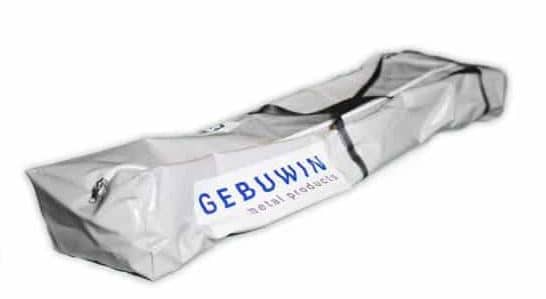
- Floor socket, wall socket and cast-in concrete socket – zinc-plated or stainless
- Carry bag
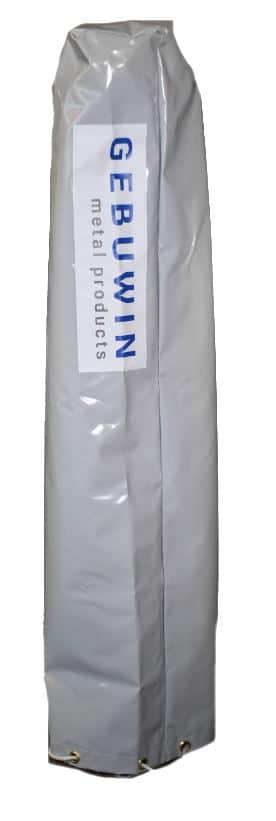
- Rain cover
Choice of material: near salt water we recommend the AISI 316 stainless version; for fresh water sites painted or zinc-plated is sufficient.
See also Gebuwin manual winches, other portable cranes and lifting equipment for water treatment plants.
Frequently asked questions
What is a portable davit crane used for?
Typically for lifting pumps, valves and other equipment from wells and basins during maintenance. One crane is enough for several sites when each lifting point has its own socket.
Is a separate winch needed?
SD125–SD500 models come with the winch and rope built in. SD900 and SD750 SST are fitted with a CW700 or TL1500 manual winch or a chain hoist.
Which socket should I choose?
A floor socket is bolted to an existing base, a wall socket to the wall, and a concrete socket is cast into the structure. Tell us the installation site and we will choose the right one.


