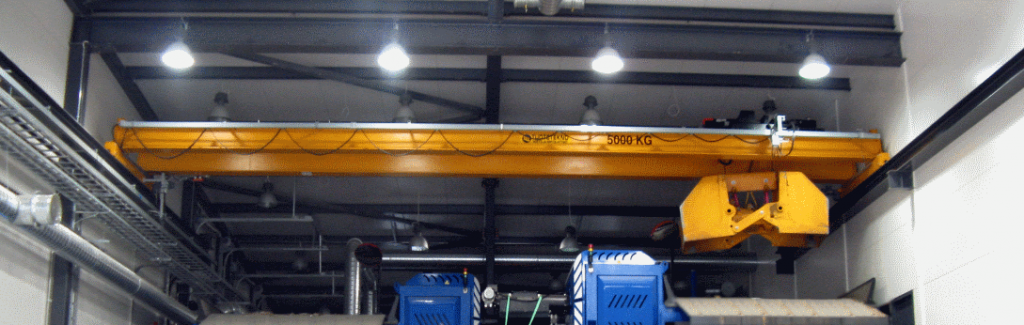
The overhead crane is one of the most efficient and widely used solutions in industry for moving heavy loads safely and in a controlled manner. A correctly selected and dimensioned overhead crane makes production more efficient, improves occupational safety and significantly reduces the physical strain on workers.
The range of overhead cranes serves both small and large lifting needs. The right choice depends above all on the load, the frequency of use and the working environment.
Conventional overhead crane – the heavy-duty solution
A conventional overhead crane for heavy loads is designed for demanding industrial use where:
- the loads lifted are large (several tonnes)
- use is continuous
- high durability and a long life cycle are required
Typical applications include:
- production plants
- machine shops
- warehouses and logistics centres
An overhead crane for heavy loads has a sturdy structure and often also requires strong hall structures around it.
Light overhead crane – flexible and cost-effective
A light overhead crane is designed for lighter applications that emphasise ergonomics. It is an excellent solution when greater capacity is not needed.
A small overhead crane is particularly suitable for:
- lifts under 2000 kg
- assembly workstations
- service and maintenance areas
- work stages where speed and ease of use are important
Key benefits:
1. Light structure
- allows easy movement
- reduces the load on the building
2. Easy installation
- can often be installed without major structural changes
- can be suspended from the existing roof structure or installed on its own columns
3. Ergonomics
- easy to move by hand or with light motorisation
- reduces the physical strain of work
4. Cost-effectiveness
- lower investment costs
- faster commissioning
Which one should you choose?
The choice usually depends on three things:
1. The weight of the load
- over 2 t → usually a conventional overhead crane
- under 2 t → a light overhead crane is often enough
2. Frequency of use
- continuous and heavy use → overhead crane
- occasional or light use → light overhead crane
3. Space constraints
- if the structures cannot withstand a heavy crane, a light solution is often the only sensible option
Safety and periodic inspections
Overhead cranes are critical work equipment, so there can be no compromise on safety.
Always remember:
- after commissioning, periodic inspections are required every year
- load limits must not be exceeded
- structures and fastenings must be correctly dimensioned
Regular servicing and inspection ensure safe use and a long service life.
Summary
Whether your lifting needs are light or heavy, an overhead crane offers an efficient and versatile solution. Correct dimensioning together with expert design is the key to successful, efficient and safe use.
If you are wondering what the right solution is, a survey by an expert saves time and money and, above all, ensures a safe result.


