
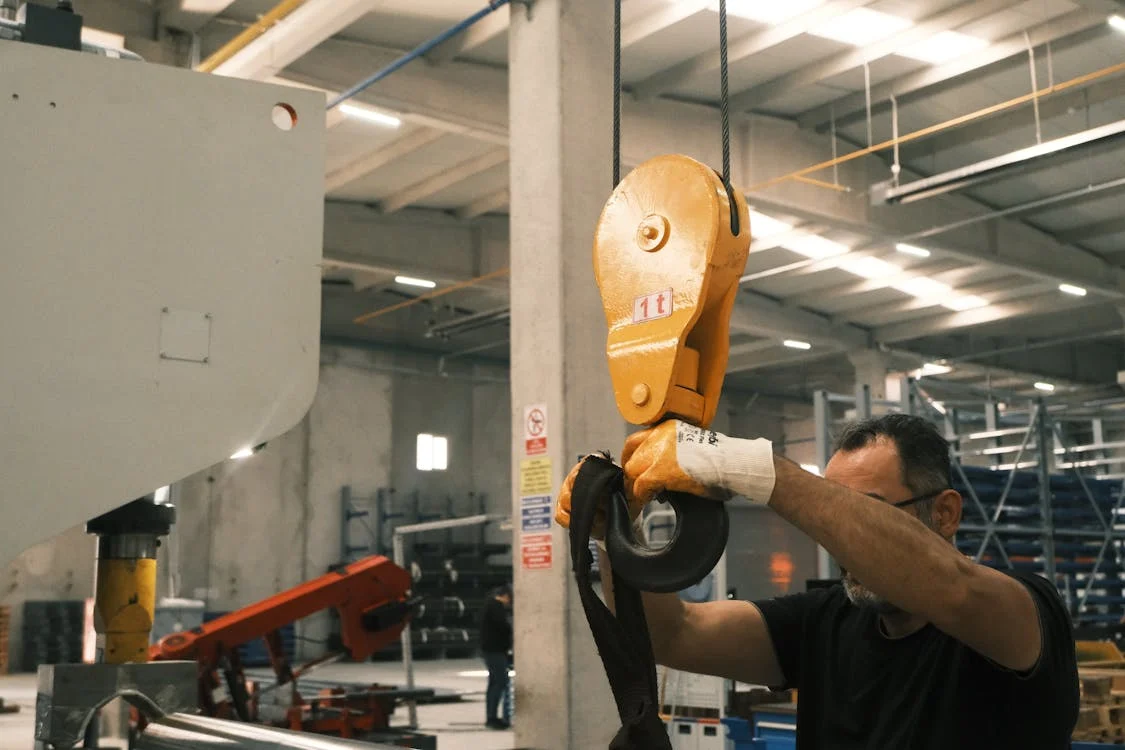
Industrial cranes and the lifting plan – the foundation of safe lifting work
Industrial cranes play a key role in many industries. Carrying out lifting work safely requires a carefully prepared lifting plan.
What is a lifting plan?
A lifting plan is a document that contains a detailed description of how the lifting work will be carried out safely. It is especially important for demanding or exceptional lifts. The plan helps minimise risks and ensures that everyone involved knows their tasks.
Key parts of a lifting plan:
- Description of the work
- Weight and dimensions of the load
- Travel distance and lifting height
- Choice of equipment
- Type and characteristics of the crane used
- Auxiliary tools, such as lifting slings and hooks
- Person responsible for the lift
- Possible additional resources
- Consideration of safety aspects
- Obstacles and power lines
- Risk assessment
- Communication and signals
- Hand signals or radio communication used
- Delimitation of the work area and warning signs
- The lift step by step
- Emergency preparedness plan
Why is a lifting plan important?
A well-prepared lifting plan prevents accidents, saves time and improves the quality of the work. It also helps meet the requirements of the Occupational Safety and Health Act and the authorities. Especially in large or complex lifts, planning is a critical part of the overall process.
Industrial cranes are indispensable tools for handling heavy loads. However, technology alone is not enough to guarantee safety – careful planning and expertise are needed. The lifting plan is the key to ensuring that lifts are carried out in a controlled way and without hazardous situations.


