
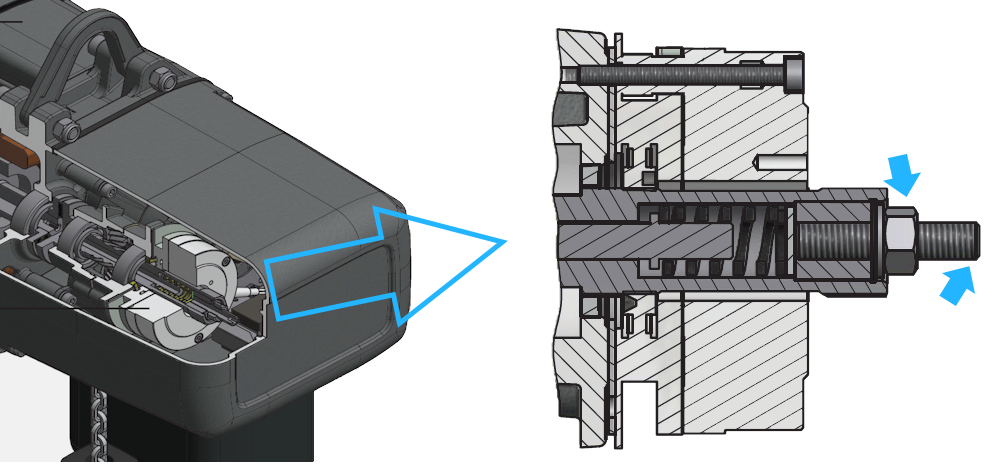
The GIS GP slip clutch is located at the end of the gearbox, on the motor side, and can be adjusted from under the larger yellow cover.
The adjustable brake shaft and compression spring are in the middle of the brake magnet. The adjustment is made with two components, the locking nut and the pressure shaft.
First open the locking nut and then adjust the slip clutch pressure with an Allen key. Simply put, turning clockwise tightens the slip clutch and turning counterclockwise loosens it.
Note that the slip clutch must be adjusted according to the manufacturer’s instructions, which in practice means a 25–30% overload. This both ensures the reliable operation of the mechanical clutch and allows load testing of the entire crane. When adjusting the slip clutch, keep in mind that the operating temperature and the device’s own warming slightly affect the operation of the slip clutch, so the clutch slips at a slightly different load when cold and after a short period of use.
The most reliable way to make the adjustment is with a load scale, so you can see at which load the clutch slips.
The slip clutch is not used to determine the maximum load when lifting; the operator must still know the load being lifted and make sure not to exceed the marked maximum load of the hoist or crane.
Please note that by carrying out procedures you are not familiar with or do not master, you may in the worst case damage the device or cause a hazardous situation.
GIS GP ketjusähkönostimet – Tehokas ja kestävä nostoratkaisu jopa 8 000 kg saakka


