
Light cranes – what they are and how to recognise them
Light cranes are modular lifting devices designed to make repetitive and relatively light lifts at workstations easier. They consist of rails, bridges, trolleys and hoists that form a flexible system for moving materials. Light cranes are easy to recognise by their slender yet strong structure and by the fact that they are usually suspended from the building structures or installed on their own legs without large foundations. They move easily by hand or electrically and are well suited for use in machine shops, assembly lines and warehouses, for example.
Characteristic features and applications
The most important features of light cranes are their lightness and adaptability. They can be built as single-rail monorails, bridge systems or separate jib cranes. Typically, the system can be installed close to the user and its travel paths can be dimensioned precisely for the task. The systems are also ergonomic, as manually operated trolleys and bridges move easily: according to the standard, the required hand force may be no more than 200 N. A light crane reduces the physical strain on the worker and improves occupational safety.
Maximum load capacity
As the name suggests, light cranes are intended for lighter lifts. According to the EN 16851 standard, their rated capacity typically ranges from a few hundred kilograms to a few tonnes. Many sources state a maximum load capacity of about 4 tonnes, but in special cases the standard allows a rated load of up to 15 tonnes or a static moment of 3,000 kNm. However, every crane must be clearly marked with its own rated capacity, and it must not be exceeded under any circumstances.
Jib cranes as part of light cranes
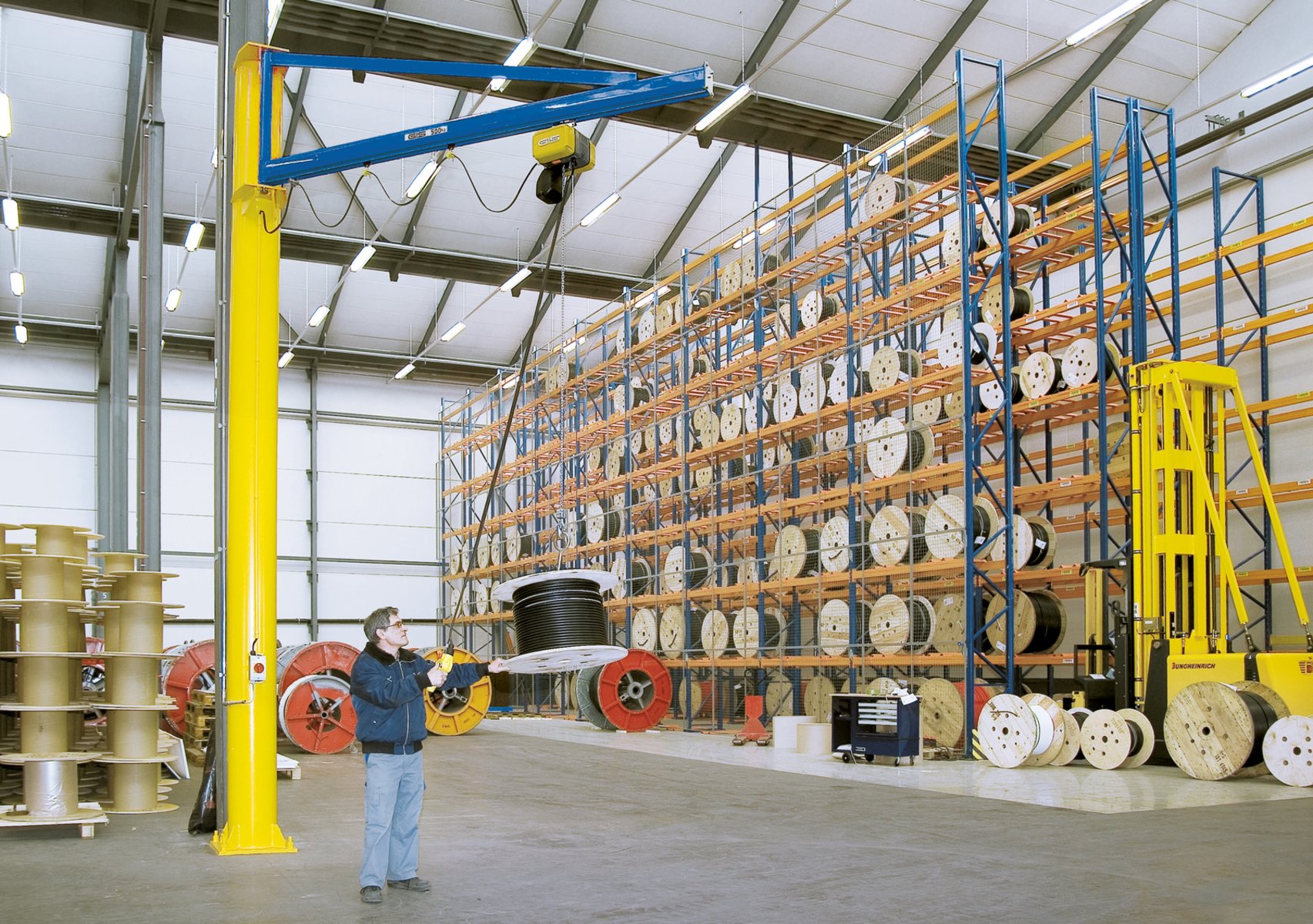
Almost all jib cranes on the market are classified as light cranes. Their slewing jib and compact structure make them particularly useful for handling loads at individual workstations. Wall-mounted and floor-mounted pillar jib cranes offer a wide slewing area and quick access to the load, which makes them an indispensable tool in many industries. When you see slender-looking yet efficient rails, bridges and jibs, you are most likely dealing with a light crane.


